Call Now (800) 879-1964
Electronic Leak Detection (ELD) is often scheduled near project closeout, when timelines are tight, crews are shifting, and pressure is high.
When testing goes smoothly, it supports faster closeout, clean documentation, and fewer return trips. When it doesn’t, it can stall schedules and create unnecessary friction between general contractors, roofing contractors, consultants, and owners.
The good news: Electronic Leak Detection delays and frustrations can almost always be avoided with advance planning and coordination.
This blog covers four practical steps roofing contractors can take to help ensure testing happens quickly, accurately, and economically.
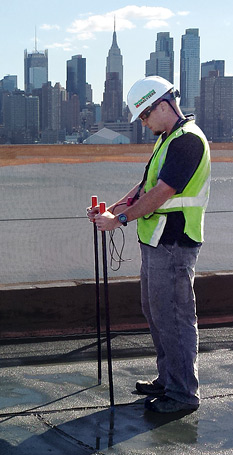
Electronic Leak Detection is being specified more and more often because it gives contractors, owners, and manufacturers the most reliable way to verify membrane integrity before the project is turned over. It has almost completely replaced flood testing because it is safer, much more accurate, faster, and usually less expensive.
Whether the testing is conducted with Electric Field Vector Mapping, High Voltage ELD, or Low Voltage Platform Scanning, these advanced test procedures deliver the most accurate and reliable membrane integrity testing.
On many jobs, ELD is directly tied to warranty approval and closeout documentation, which is why it’s become a standard step at the end of installation.
Because ELD now plays such a critical role in closeout and warranty approval, a little coordination up front goes a long way toward ensuring a fast, accurate and smooth testing experience.
Electronic Leak Detection delivers the most value when it’s planned early, coordinated with installation sequencing, and integrated into quality assurance and closeout procedures.
A common challenge to effective Electronic Leak Detection is the lack of a reliable ground. In conventional roof assemblies, electrically insulating materials such as insulation, cover boards, and vapor barriers interrupt the electrical path to ground needed for reliable testing. When that path is broken, test procedures will be much less conclusive and reliable (testing can report false negative findings).
To prevent this:
Early identification of challenges helps ensure testing delivers the most accurate and reliable results without slowing the project down.
Once a reliable electrical ground is available in the assembly, the next key to a smooth test day is making sure the site itself is ready.
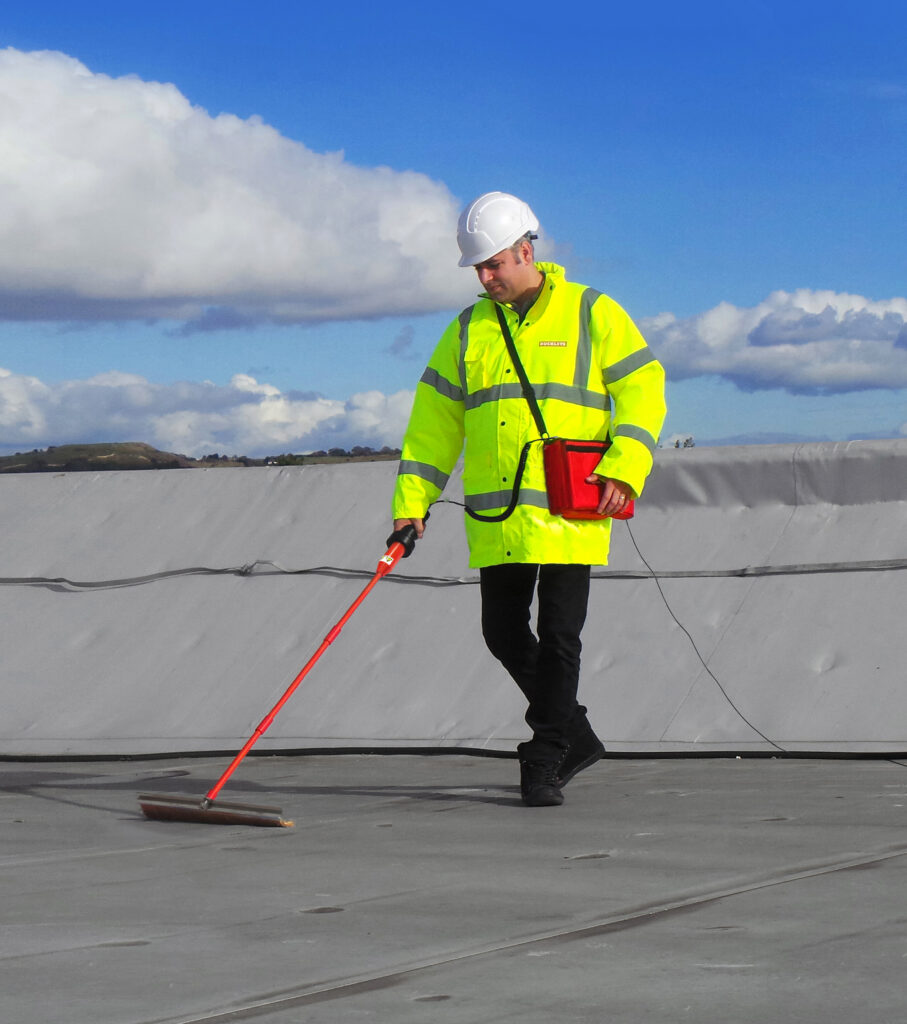
Once the roof is ready for testing, site preparation becomes the biggest driver of efficiency on test day. To avoid lost time and unnecessary delays:
A properly prepared site allows the technician to move smoothly into testing, without waiting on cleanup, drying, or staging, keeping the project moving and the schedule on track.
With the surface prepared and conditions verified, the next factor that determines how quickly testing wraps up is how efficiently repairs can happen.
ELD is most efficient when testing, repair, and retesting can happen in real time.
To keep the process moving:
This coordination helps prevent projects from stalling between testing and repair, avoidable delays during closeout, and the potential need for a revisit.
However, even with strong planning, top-quality testing procedures, and rapid repairs, successful projects also depend on everyone sharing the same expectations going into testing.
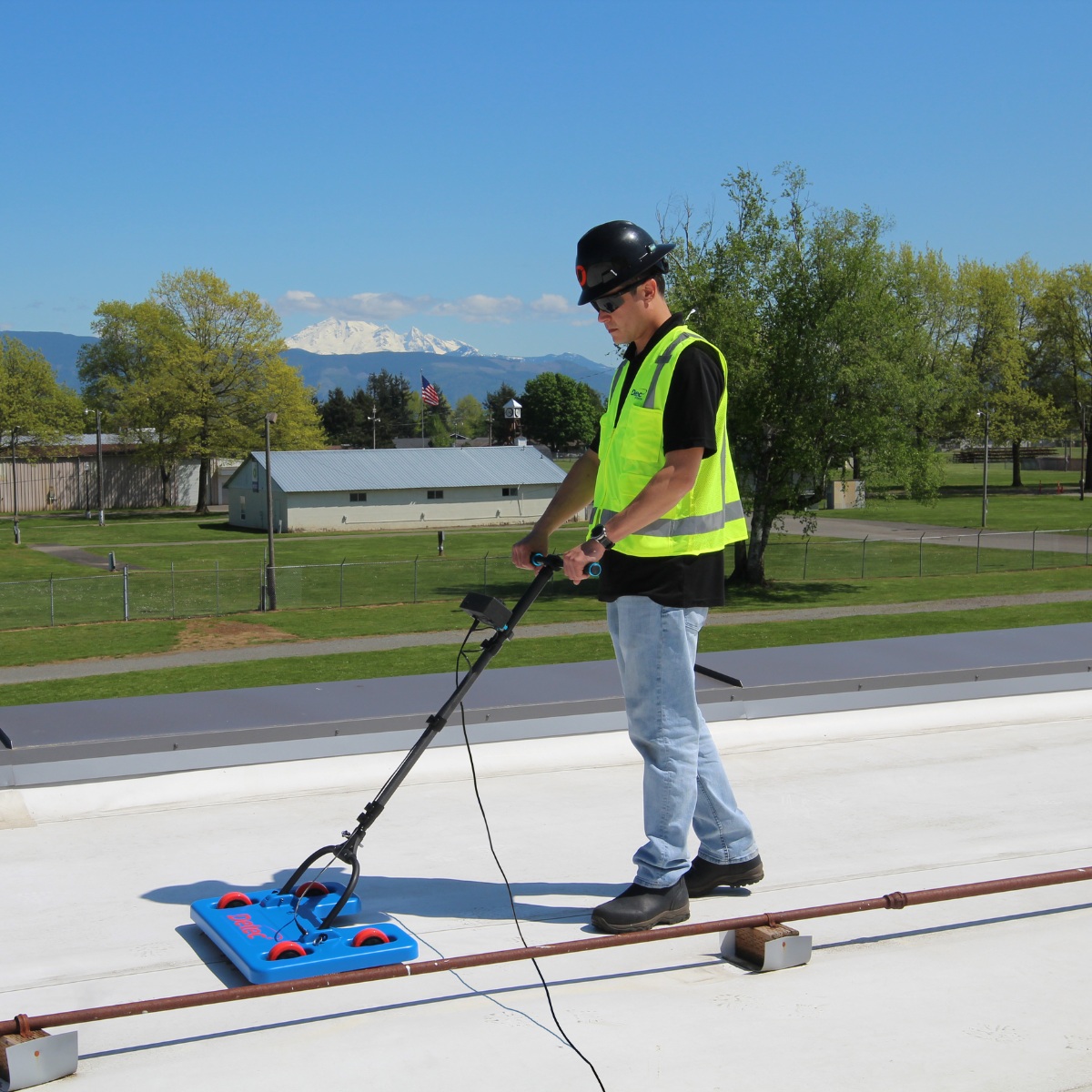
Electronic Leak Detection is highly accurate on exposed membranes, but no test method can identify every possible leak under every possible assembly condition. That’s why expectation-setting needs to happen before testing begins, not after results are delivered.
Internally, project teams should understand that:
These limitations must be identified and communicated clearly upfront—to the design team, building owner, and all stakeholders. Full disclosure protects project timelines and contractor credibility, and ensures realistic closeout expectations.

When Electronic Leak Detection is treated as a coordinated part of the construction process, it supports smooth and accurate testing, timely repairs, and fast turnover.
Planning for proper grounding, preparing the site, staging repairs, and setting expectations early all work together to reduce delays, protect schedules, and minimize friction at the end of a project.
If ELD is included on your upcoming project, early coordination can make a meaningful difference in how smoothly your testing and closeout proceed. At IR Analyzers, we can review your assembly, schedule, and site conditions to ensure the best approach for your project.
Request a quote today to start the conversation early and keep your project moving forward.